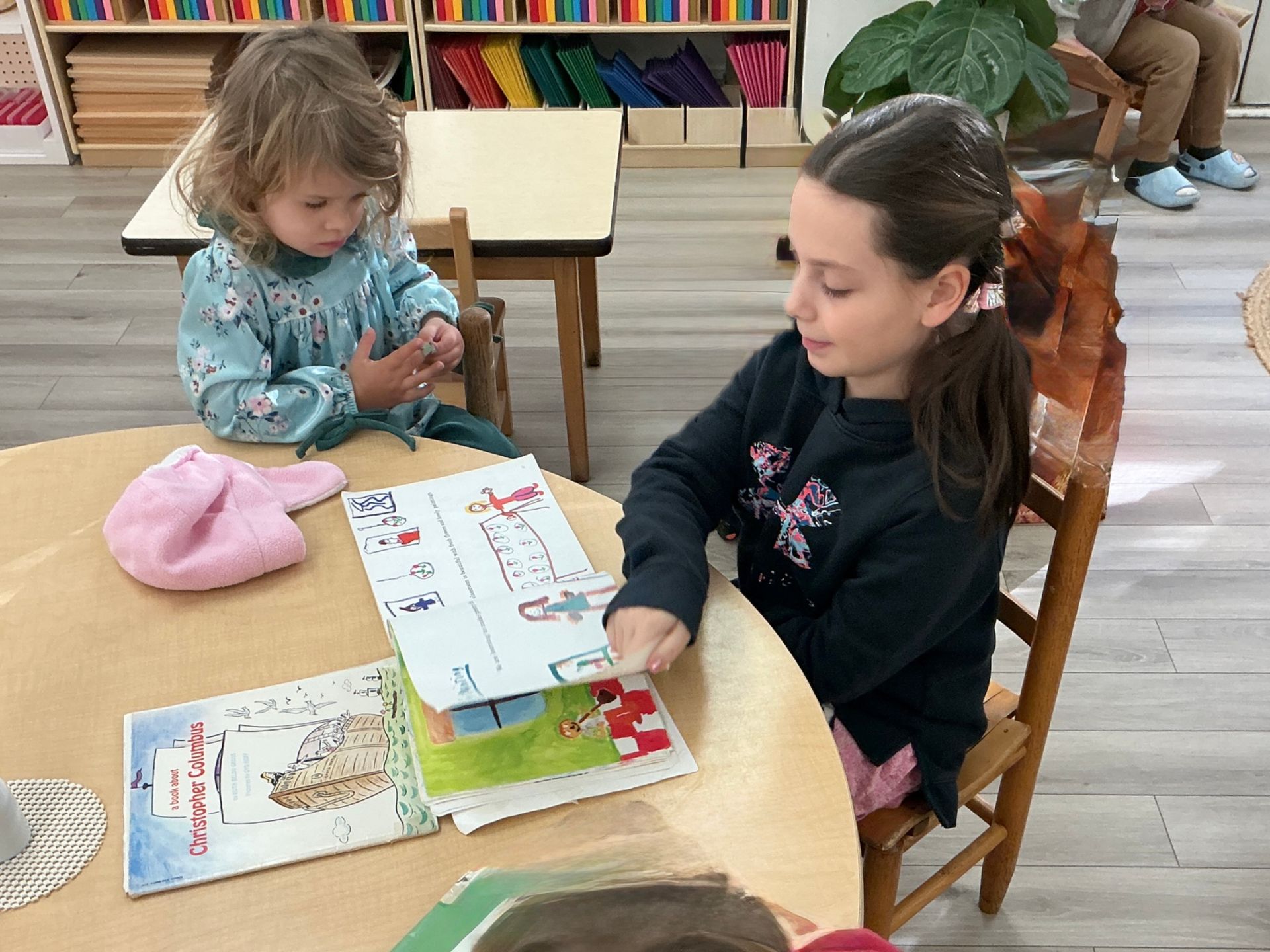

Maria Montessori believed that children learn best in a social environment where they can both receive help and contribute to the learning of others.
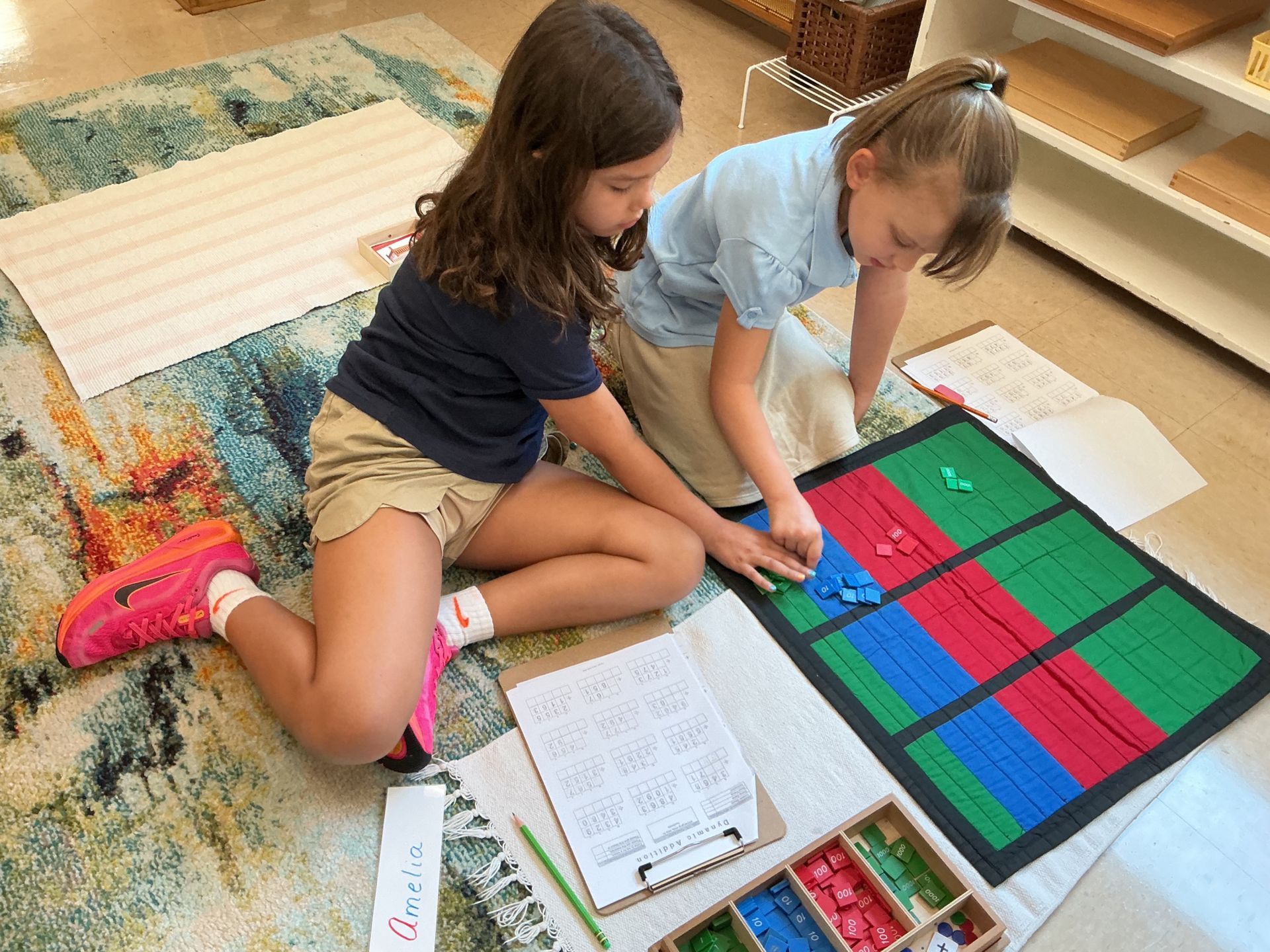
One of the most distinctive and meaningful aspects of a Montessori classroom is the three-year
age grouping. Rather than placing children in classrooms with only children of the same age,
Montessori environments intentionally bring together three consecutive age groups. In Lower
Elementary, for example, you will find first-, second-, and third-year students learning and
working together as a community.
This structure was not simply a practical way to organize a classroom. Maria Montessori
believed that children learn best in a social environment where they can both receive
help and contribute to the learning of others. The three-year classroom provides children
with opportunities to grow academically, socially, emotionally, and personally in ways that a
single-age classroom cannot.
Learning From One Another
In a Montessori classroom, the teacher is not the only source of knowledge. Children are
constantly learning from one another.
A first-year student may watch a third-year student confidently complete a challenging piece of
work and think, “Someday I will be able to do that, too.” A second-year student may help a
younger classmate understand a process they have recently mastered. A third-year student has
the opportunity to explain, demonstrate, mentor, and take on leadership responsibilities.
In this way, learning becomes a community experience rather than a competition.
Maria Montessori observed that children often learn particularly well from other children
because they share a similar language, perspective, and experience. A child who has just
mastered something can sometimes explain it in a way that feels more accessible to a younger
child.
The Younger Child: Learning Through Observation
Our youngest students enter the classroom as observers and explorers.
They are surrounded by older children who already understand the routines, expectations, and
rhythms of the Montessori environment. They see children working independently, choosing
purposeful activities, collaborating with others, giving presentations, caring for the classroom,
and solving problems.
Much of this learning happens naturally through observation.
Rather than being told everything they need to know, younger children gradually absorb the
culture of the classroom. They begin to understand, This is how we work here. This is how we
care for one another. This is what it means to be part of our community.
They also have the comfort of knowing that they will eventually become the experienced
students in the room.
The Middle-Year Child: Growing in Confidence
The second-year student occupies a unique and important place in the community.
These students are no longer the youngest, but they are not yet the oldest. They have gained
familiarity with the classroom and are developing greater independence, confidence, and
academic stamina.
They can look back and recognize how much they have learned since their first year while also
looking ahead to the responsibilities that come with becoming a third-year student.
This middle year is often a time when children begin to take greater ownership of their work and
their role within the community. They are increasingly able to collaborate, help others, and apply
what they have learned in new ways.
The Oldest Child: Becoming a Leader
By the third year, students have developed a deep understanding of the Montessori
environment.
They know the routines. They have experienced success and frustration. They have learned
how to use materials, manage their time, collaborate with classmates, and persevere when work
becomes challenging.
Now they have an opportunity to give back to the community.
Leadership in Montessori does not mean being "in charge." Instead, it means becoming a
responsible and contributing member of the community.
Older students may help younger classmates, model appropriate behavior, demonstrate a
lesson, care for the classroom, participate in group work, or take responsibility for a classroom
responsibility. Through these experiences, they discover that knowledge becomes even more
meaningful when it is shared.
Teaching another child also strengthens the older child's own understanding. When children
explain an idea, demonstrate a process, or answer a question, they are often consolidating their
own learning in the process.
A Classroom That Grows With the Child
Perhaps one of the most beautiful aspects of the three-year cycle is that children experience
the classroom from three different perspectives.
They begin as the youngest.
They grow into experienced members of the community.
And eventually, they become leaders.
This progression allows children to experience the full cycle of learning: receiving, practicing, mastering and sharing.